File_05 · Shipped Product · Live Nov 2026
Elsewhere
An AI Game Master that remembers what you did.
An AI-native fantasy roleplaying game my husband and I built and brought to market. Players say what they want to do, real dice and rules decide what happens, and the world keeps track of every choice. Play solo, or with up to five friends.

01 / The Problem
AI could tell a story.
It couldn't run a game.
Plenty of people want to play tabletop roleplaying games but never find the time, the group, or someone willing to run it. General-purpose chatbots looked like an answer, and they broke fast: they forgot what you were carrying, made up rules as they went, and lost track of the story.
The opportunity wasn't "more AI." It was an AI experience people could trust: one where choices carry real weight, the world stays consistent, and the game adapts to the person playing it.
02 / The System Principle
The core design decision: the AI tells the story, but it never decides what happens. Every outcome comes from a real game system of dice, attributes, gear, gold and experience.
Places, people and lore are set up front.
Every choice is saved and carried forward.
Dice and rules resolve every action.
The AI voices the result, never invents it.
03 / The Agent Architecture
Instead of one chatbot doing everything, Elsewhere runs six specialized AI agents with narrow jobs. I directed the prompt and agent program: defining what each agent is responsible for, reviewing prompts against real play, and keeping the AI consistent, rule-bound and in voice.
Narrator
Reads what the player wants to do, hands the mechanics to the game engine, then narrates what happened.
World Builder
Builds the world, the opening situation and the cast for each new campaign.
Housekeeper
Turns what happened in the story into precise changes to the saved game state.
Librarian
Keeps the chapter log, tracks who deserves the spotlight, and checks the story for drift.
Psychologist
Builds a psychological portrait of each character from how they actually play.
Voice
Directs spoken narration, with five voices to read the adventure aloud.
04 / Designing for the Human
Adapting to people, without profiling them.
This is where my psychology and research background shaped the product. The game starts with one question, "What do you protect when no one is watching?", and the answer seeds who your character is.
From there, the Psychologist agent learns from behavior rather than assumptions, and it is designed to stay honest about what it doesn't know.
-
Evidence before inference. Descriptive traits fill in after a single scene. Deeper traits only appear once a pattern repeats. When the evidence isn't there, the field stays blank instead of faking certainty.
-
Privacy by design. Sensitive insights are never shown to players, and in group games no one can read another player's profile.
-
Guardrails grounded in research. I wrote the story-experience guardrails using self-determination theory (autonomy, competence, relatedness), with acceptance criteria for campaigns and a scoring rubric for story quality.
"Agency is not a personality diagnosis." From the Elsewhere story-experience guardrails
05 / The Experience
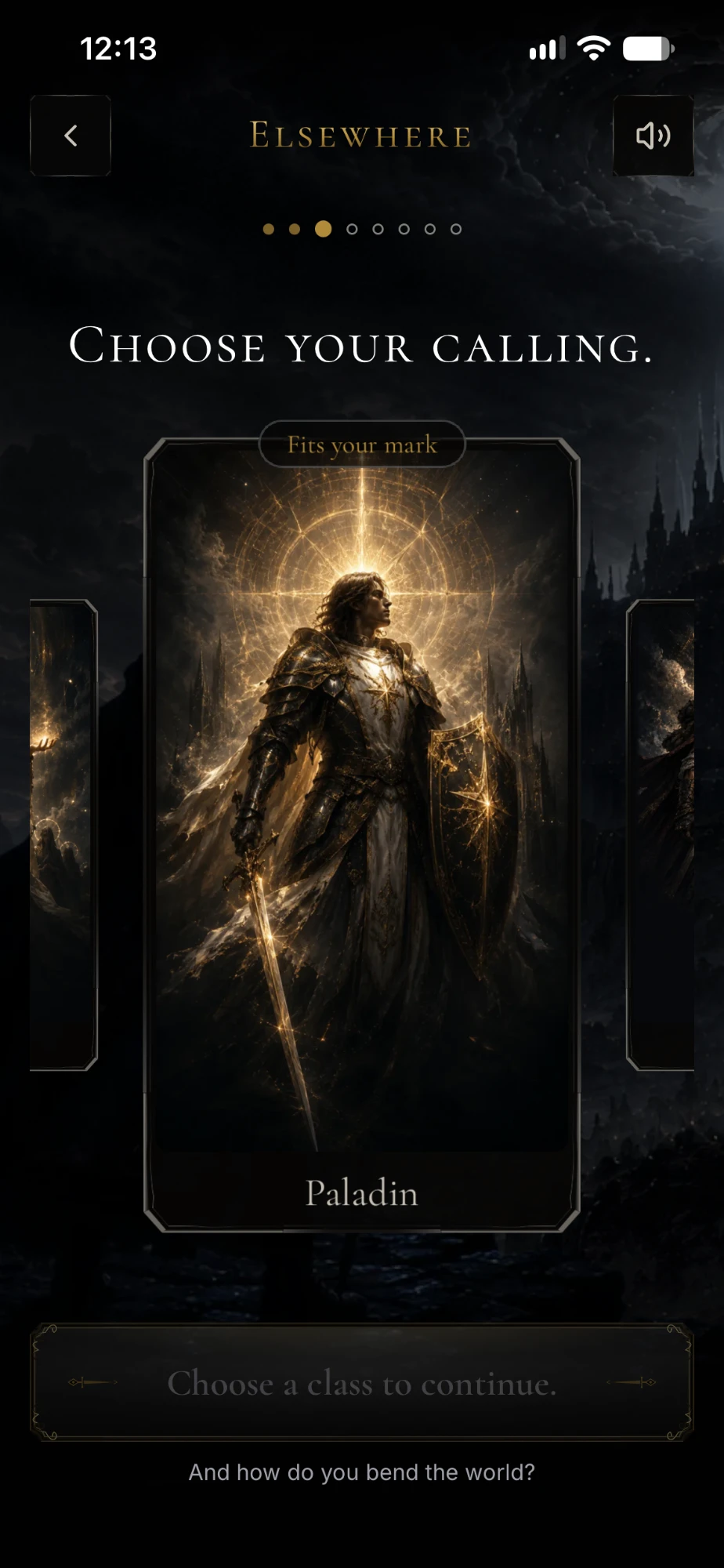
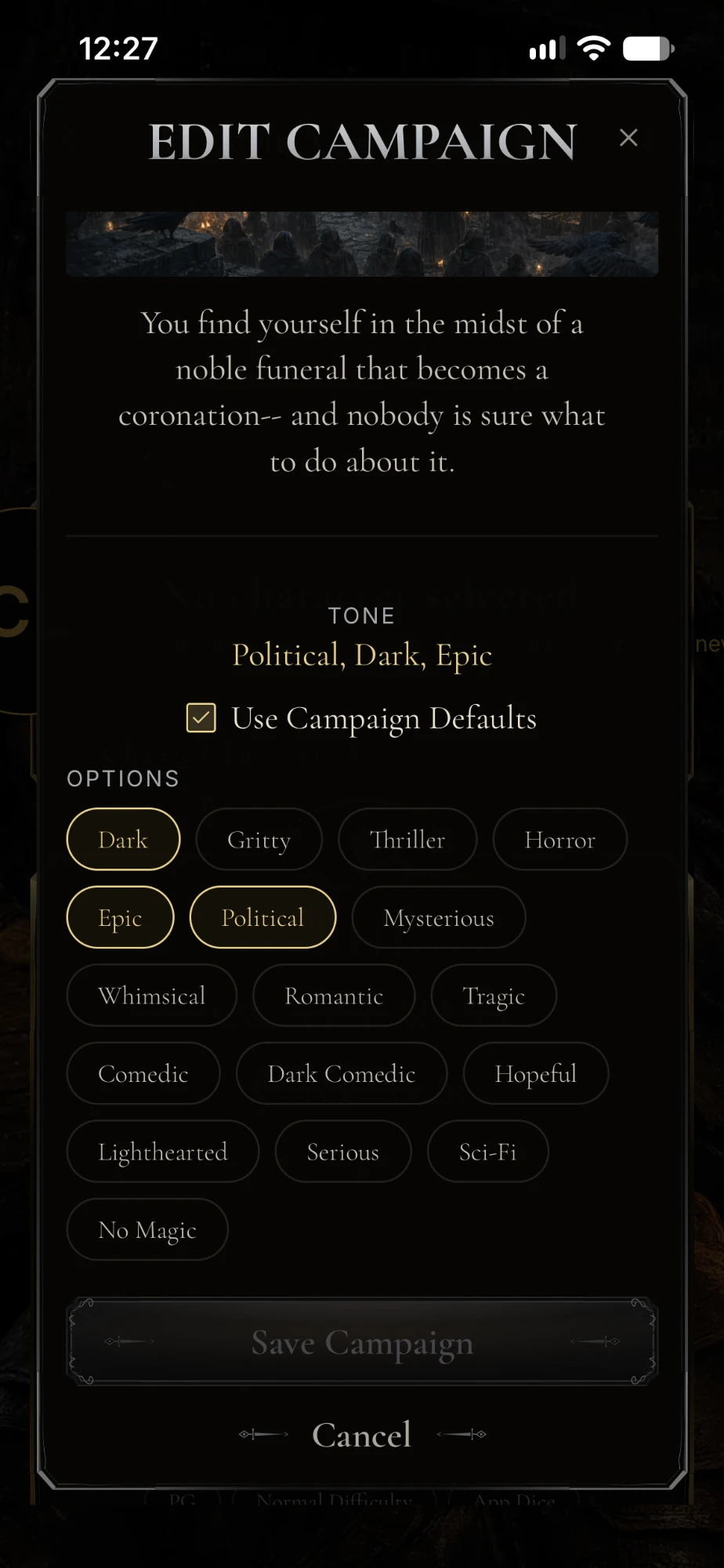
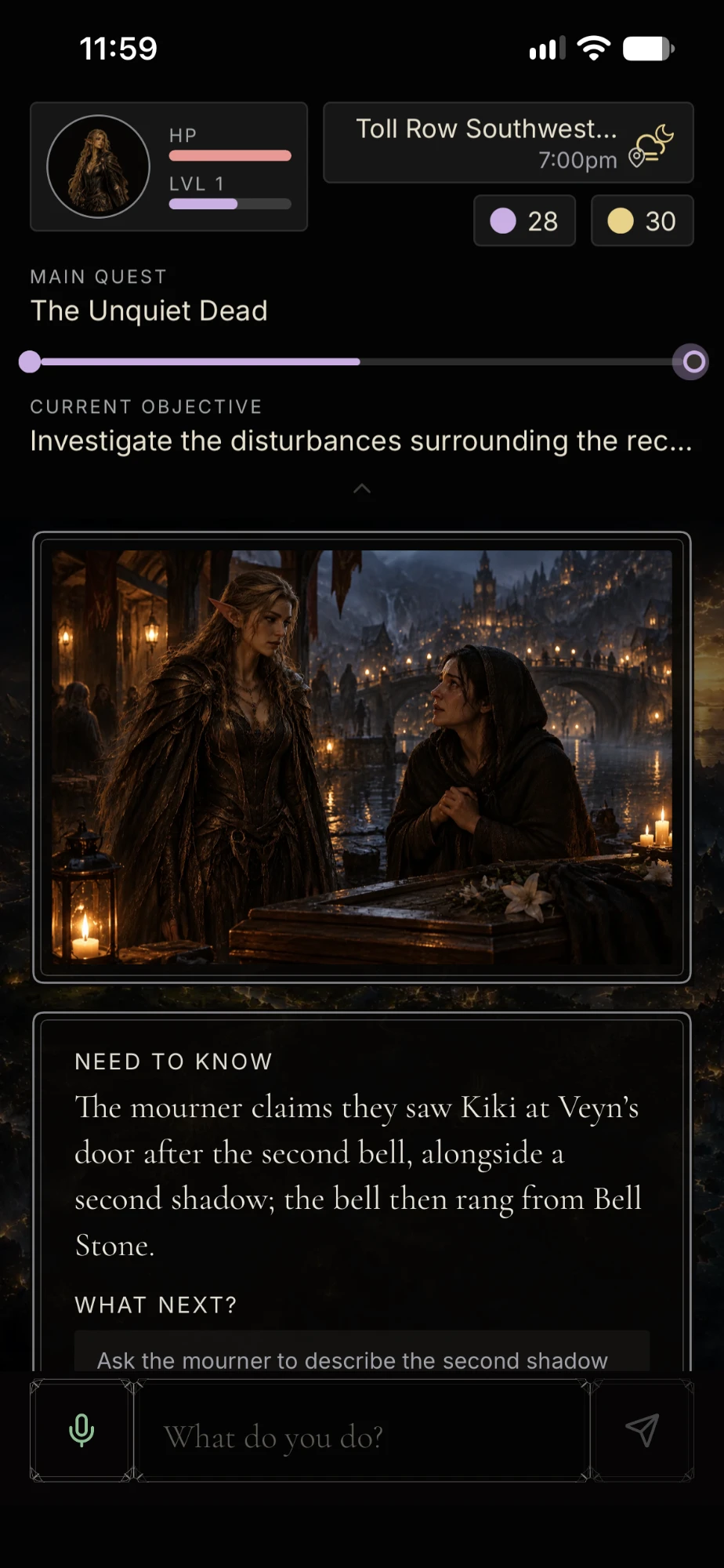
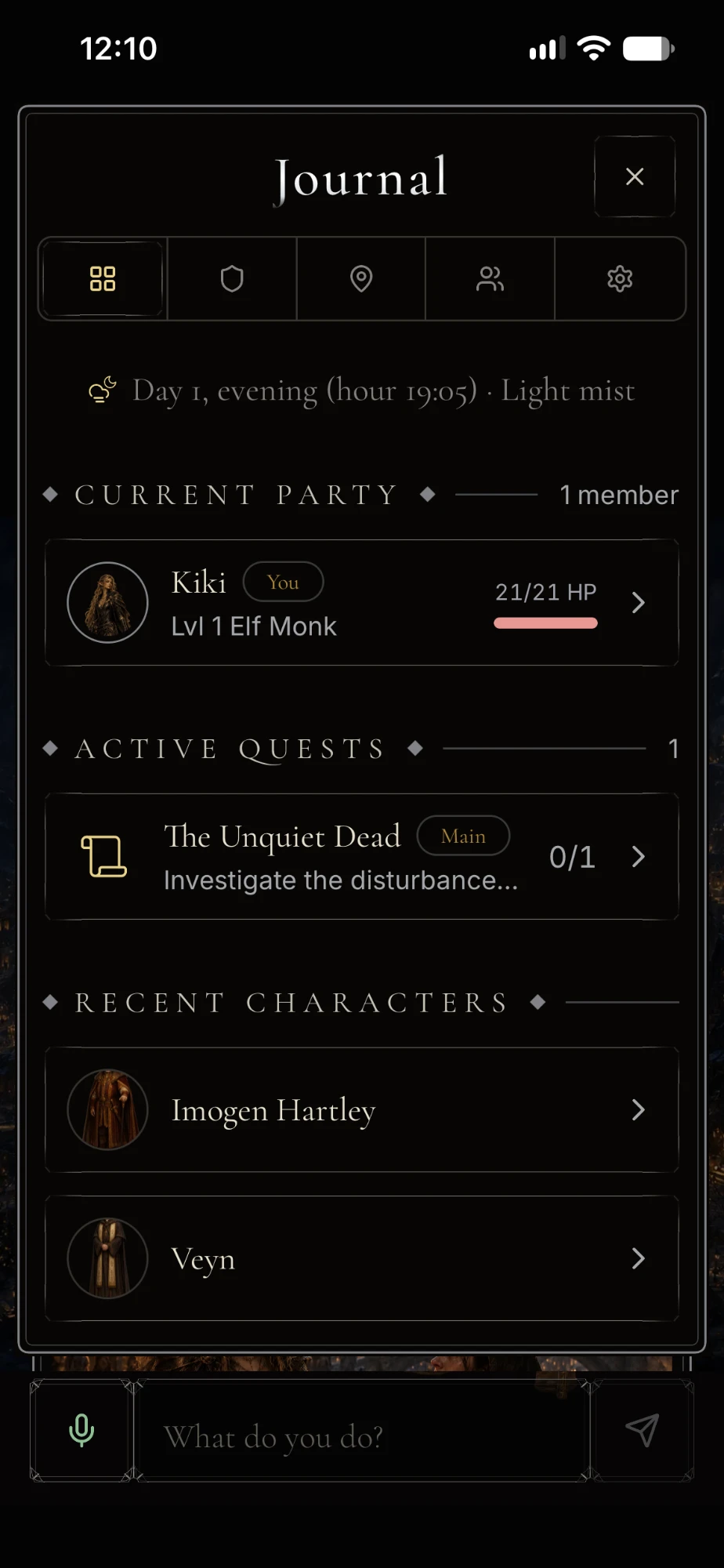
Playing in minutes: no rulebook, no setup, no scheduling. Real gameplay, recorded on iPhone.
06 / Monetization & Launch
Free to start, with no credit card, no group and no game master needed. Pricing is designed around play, so people pay for the experience they actually use.
Credits
Free first turns, then low-cost credit packs that cover hundreds of turns.
Characters
One free hero, with extra character slots and reward packs for players who want more.
Custom Game Master
A yearly subscription that lets power users bring their own AI model.
One purchase system across web, App Store and Google Play.
Shipped
From identifying product opportunities to bringing one to market.
Launched in November 2026 and welcoming its first paying players. Built with an AI-assisted development workflow, where I coordinated parallel Claude Code sessions into reviewed releases.
What will the world remember about you?
Your first turns are free, and your hero is a couple of minutes away.